
Every kitesurfer remembers the moment when it all clicked: the first time riding independently, the first upwind tack, the first jump that actually worked. The place where you learn has a huge impact on how quickly you progress. Strong, gusty winds, choppy water or a crowded beach can turn ten hours of lessons into twenty. In this article, we explain, point by point, why Parajuru is one of the best places in Brazil to learn and progress in kitesurfing, whatever your level.
Wind: Consistent trade winds from July to January
Progression starts with predictable wind conditions. In Parajuru, on the east coast of Ceará, the seasonal trade winds generally blow from the east to the southeast from July to January. August to November is typically the most reliable period for kitesurfing, with September, October and November standing out for their consistency. Wind strength varies from day to day, but these months offer excellent conditions for making the most of your time on the water.
The Right Conditions to Learn and Progress
The wind often follows a daily pattern that makes it easier to plan your sessions:
- Morning: The wind is often a little lighter, making it a good time for lessons, first rides and technical practice when conditions allow.
- Afternoon: The wind generally picks up, often reaching its strongest towards the end of the afternoon. These conditions are ideal for practising manoeuvres, working on jumps and enjoying Parajuru’s famous sunset sessions.
Favourable conditions for learning: Parajuru’s wind often blows side-onshore or onshore, depending on the conditions. This can help bring riders towards the beach rather than carrying them directly offshore. However, wind direction alone does not guarantee safety, so lessons should always take place with a qualified instructor who knows the local spot.
What Is the Ideal Kite Size?
During the peak season, many riders use kites ranging from 7 to 10 m², with a larger kite for lighter-wind days. Bringing your own quiver? Two kites will usually cover a good range of conditions.
Travelling light? Equipment rental is available locally.
Water: Flat lagoons on the beach, waves on the sandbar
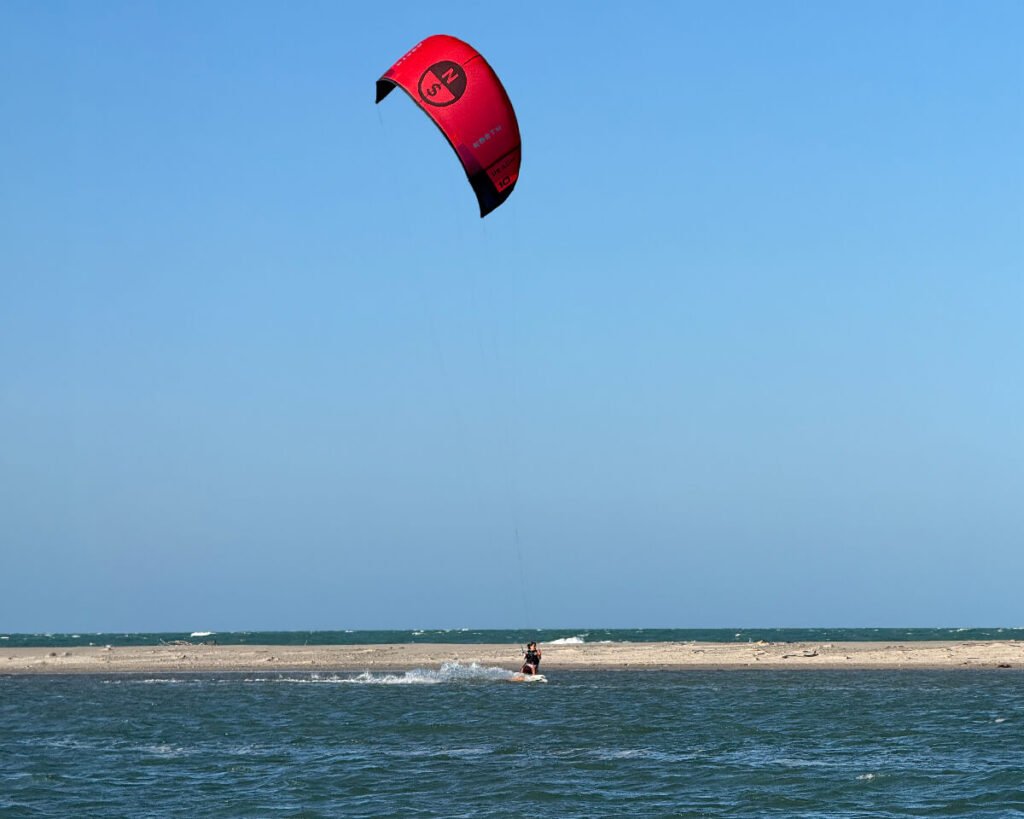
This is what makes Parajuru special. Sandbanks along the beach create shallow, flat-water lagoons at high tide, right by the shore. A little further out, the outer sandbar offers small, clean waves for riders looking for a different challenge.
Shallow, flat water for beginners
In many areas, you can stand up in the water. When you fall, you can simply get back on your feet, recover your board and try again, rather than spending precious minutes struggling to retrieve it. Shallow, flat water makes learning more comfortable and allows you to focus on your technique and spend more time practising.
The water stays warm throughout the year, typically around 26–28°C, so a wetsuit is generally unnecessary.
Flat water to practise and progress
For intermediate and advanced riders, the flat-water areas are ideal for working on transitions, carving, toeside riding and your first jumps. Landing in calmer water can also make practising new tricks feel more manageable than in choppy conditions.
Waves when you’re ready for more
Once you’ve mastered riding upwind, the outer sandbar offers another dimension to your sessions. Small waves and a less powerful shore break can provide a great introduction to wave riding and riding strapless.
Sandbanks naturally shift with tides and currents, so the shape of the riding areas and the best spots can change from week to week. Local knowledge helps you find the best conditions for your level.
Safety: Why Parajuru Is a Reassuring Place to Learn
Feeling safe is not a small detail. A relaxed rider can focus better, build confidence and progress more quickly. Several factors make Parajuru a comfortable place to learn:
- Fewer kites on the water: less congestion at launch areas, more room to practise and fewer worries about right-of-way situations.
- A wide, open beach with plenty of space for launching and landing.
- Shallow water near the shore in suitable areas, where you can stand up.
- Side-onshore to onshore winds: depending on the conditions, the wind can help carry you towards the beach rather than directly offshore.
- Appropriate safety equipment and qualified instruction: helmets and impact vests or buoyancy aids are used according to the lesson and conditions, with an instructor supervising every session.
Good to know: you don’t need to be an experienced swimmer to start learning, but you must be comfortable in the water and follow your instructor’s safety requirements. Shallow water and safety equipment help, but they do not eliminate the risks involved in kitesurfing.
The Teaching Method: Personal Coaching with IKO-Certified Instructors
At Caju Knots, lessons are taught by Priscilla and Xavier, both IKO-certified instructors. We teach in very small groups, often one instructor per student, adapting each session to your level and the day’s conditions rather than following a rigid timetable.
Our step-by-step approach
- Beach training: risk awareness, wind direction, the wind window, safety procedures and equipment setup.
- Kite control: flying skills, launching and landing the kite, and self-rescue techniques.
- Getting on the water: understanding the power zone, body positioning, body dragging and your first water starts.
Each session lasts approximately 2.5 hours, including instruction, equipment preparation, time on the water and a final debrief. Many beginners need around 10 to 20 hours of lessons to work towards independent riding, although progress varies from person to person.
Our goal is not simply to get you riding. It is to help you become a confident, safety-conscious kitesurfer who understands the skills needed to ride independently and continue progressing at different spots around the world.
What You Can Work on at Each Level
Complete beginner
Start with a 2.5-hour introductory lesson to discover kitesurfing and get a feel for the sport. If you want to continue, a 10-hour lesson package provides a structured path towards independence, covering kite control, body dragging, water starts and your first rides.
Riders who can already ride a few metres
Parajuru’s flat-water areas are ideal for working on common challenges: riding upwind, controlling your speed, making transitions without falling and riding confidently in both directions.
Independent riders
Fine-tune your jumps, toeside riding, carving transitions and first tricks. When you’re ready for a new challenge, explore the waves on the sandbar or join a supported downwinder along the coast.
Parajuru vs Other Spots for Progression
Cumbuco is one of Brazil’s best-known kitesurf destinations, with plenty of schools and shops. However, the sea can be choppy, and popular launch areas get busy during the high season. Beginners are often taken to nearby lagoons, such as Cauípe, to find flatter water.
Jericoacoara is legendary, but its main kite spots can also get crowded and are often better suited to riders who already have some experience.
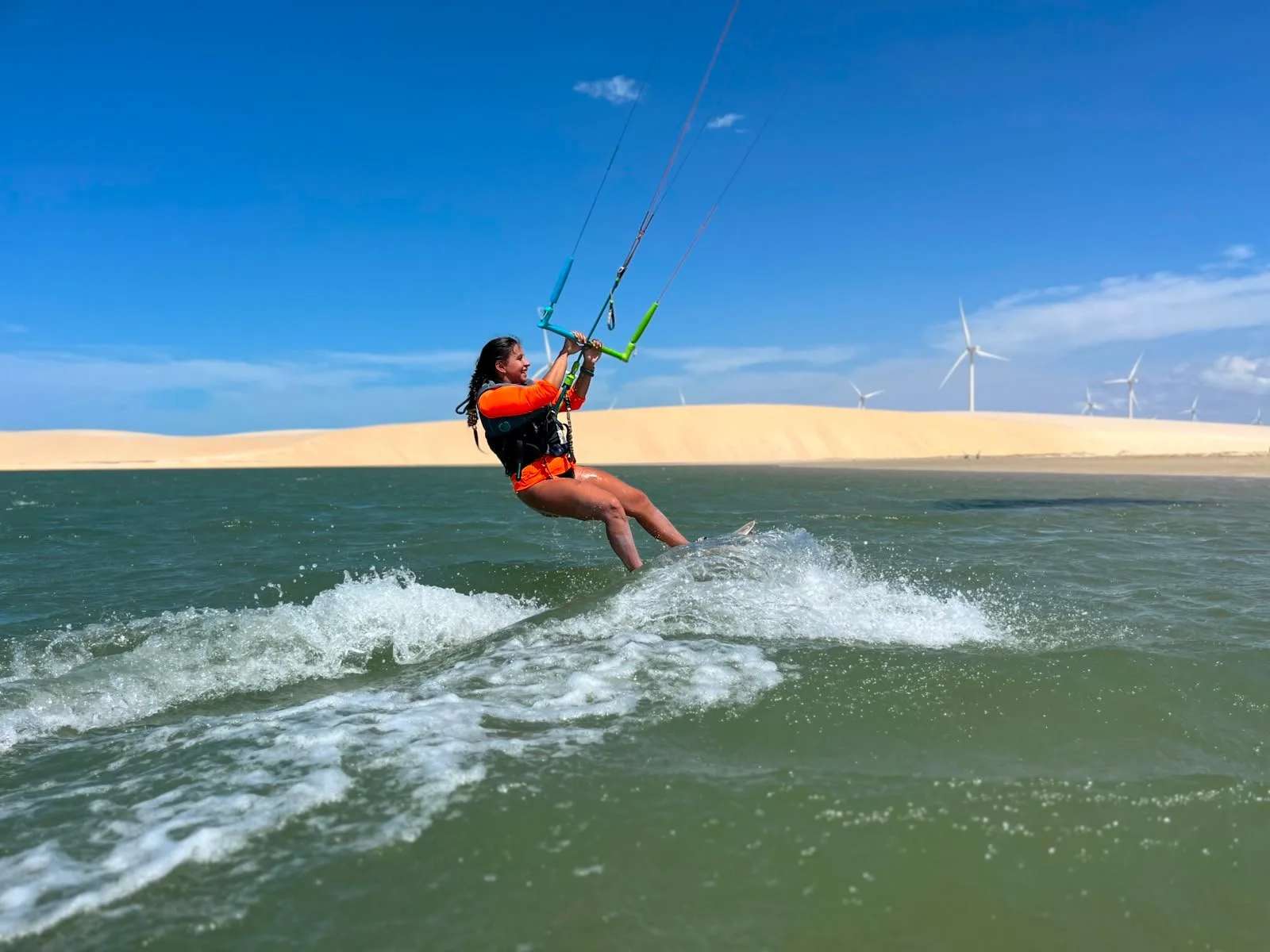
In Parajuru, flat-water areas form right on the beach, and you will often share the water with only a handful of other kitesurfers. For your first course or a week dedicated to improving your skills, fewer people on the water means more space, less stress and more time riding.
Read our complete comparison of kitesurf spots south of Fortaleza.
Recover Between Sessions
Kitesurfing days are long, and progression also happens out of the water. At Caju Knots, Priscilla is a certified yoga teacher who offers sessions focused on mobility, flexibility and stretching, with particular attention to the shoulders, hips and lower back, all of which work hard during kitesurfing.
On lighter-wind days, yoga, watercolour painting, cooking and local excursions offer other ways to enjoy your time in Parajuru.
Frequently Asked Questions
Is Parajuru good for beginner kitesurfers?
Yes. Its shallow, flat-water areas, seasonal trade winds, wide beach and generally uncrowded conditions make Parajuru an excellent place to learn. Conditions vary with the tide and wind, so choosing the right area for your level is important.
How many hours does it take to become an independent kitesurfer?
Many beginners need around 10 to 20 hours of lessons to work towards independent riding. The time required depends on your learning pace, previous experience and how regularly you practise.
Is all the equipment included in lessons?
Yes. Lessons include the kite, bar, harness, board, helmet and appropriate impact vest or buoyancy aid. Bring your swimwear, a lycra top, sunglasses with a secure strap and sunscreen suitable for the local marine environment.
Is Parajuru suitable for advanced riders?
Absolutely. Flat-water areas for freestyle, small waves on the sandbar and supported downwinders along the coast offer plenty of opportunities for experienced riders to progress, often with plenty of space on the water.
Ready to Take Your Kitesurfing Further?
Explore our kitesurfing lessons in Parajuru, packages and prices, then tell us your riding level and travel dates. We will help you find the right option for your stay.
Planning your whole trip? Our Ceará kitesurf travel guide covers transfers, the wind season and accommodation.